Enterprise marketing organizations have invested significantly in technology over the past decade. Most have a combination of CRM, marketing automation, data management, analytics, and workflow tools supporting their day-to-day operations.
I've worked with organizations that have sophisticated technology environments but still rely heavily on manual processes, inconsistent data, and workarounds to get campaigns out the door.
The platforms themselves aren't always the issue. In many cases, there are opportunities to improve how they're integrated, how teams use them, and how the underlying processes are designed.
When approaching a marketing technology modernization initiative, I typically start with an assessment of the existing environment before recommending new technology or major architectural changes.
1. Understanding the Current Environment
Consider an enterprise marketing organization using Salesforce CRM, Adobe Marketo Engage, Snowflake, Adobe Workfront, Tableau, and Azure OpenAI. These cover customer records, campaign execution, enterprise data, workflow management, reporting, and approved AI capabilities.
Each platform serves a purpose, but how they work together determines how effectively the organization can operate. Campaign requests might originate in Workfront while requirements are manually recreated in Marketo. Salesforce and Marketo may be integrated, yet inconsistent lifecycle definitions create lead management and reporting issues. Snowflake may contain useful customer information that marketers still need to export manually to build audiences.
These are examples of where improving integration, processes, and data governance may create value without replacing existing platforms.
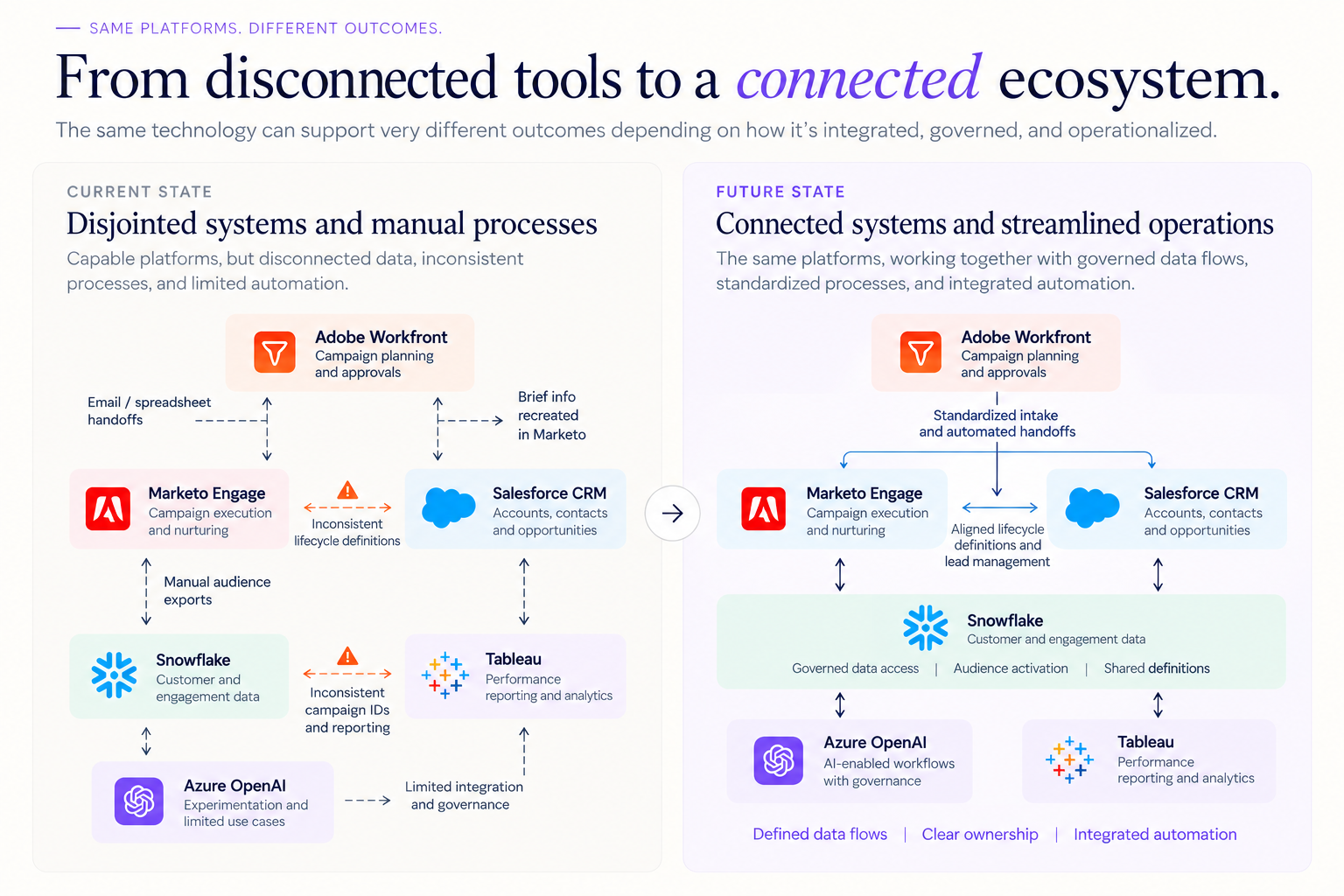
The platforms usually aren't the problem. The way you've wired them together is.
2. Assessing Where Improvements Are Needed
I generally look at three areas when assessing an existing marketing technology environment.
Technology and Integrations
Document the platforms, their purpose, and how information moves between them. Review integration methods, overlapping functionality, system dependencies, and utilization. A platform inventory helps, but mapping actual information flows is often more revealing.
Operations and Workflows
Look at how work moves through the organization. Campaign development is a useful example because it spans multiple teams and systems. Mapping intake through execution and reporting can reveal duplicate work, approvals, manual handoffs, and automation opportunities. Include the informal workarounds teams use today.
Data and Governance
Evaluate data quality, lifecycle definitions, system-of-record responsibilities, access controls, and reporting consistency. For AI use cases, assess whether the current data, processes, and controls can support the intended activity.
3. Prioritizing the Opportunities
Once the current state is documented, determine which improvements should happen first. I typically evaluate business impact, implementation effort, dependencies, and time to value.
Some improvements can happen relatively quickly, such as standardizing campaign intake or naming conventions. Others, including data architecture changes, integration improvements, or platform consolidation, require a more coordinated roadmap. The goal is to sequence work so early improvements deliver value and support what comes next.
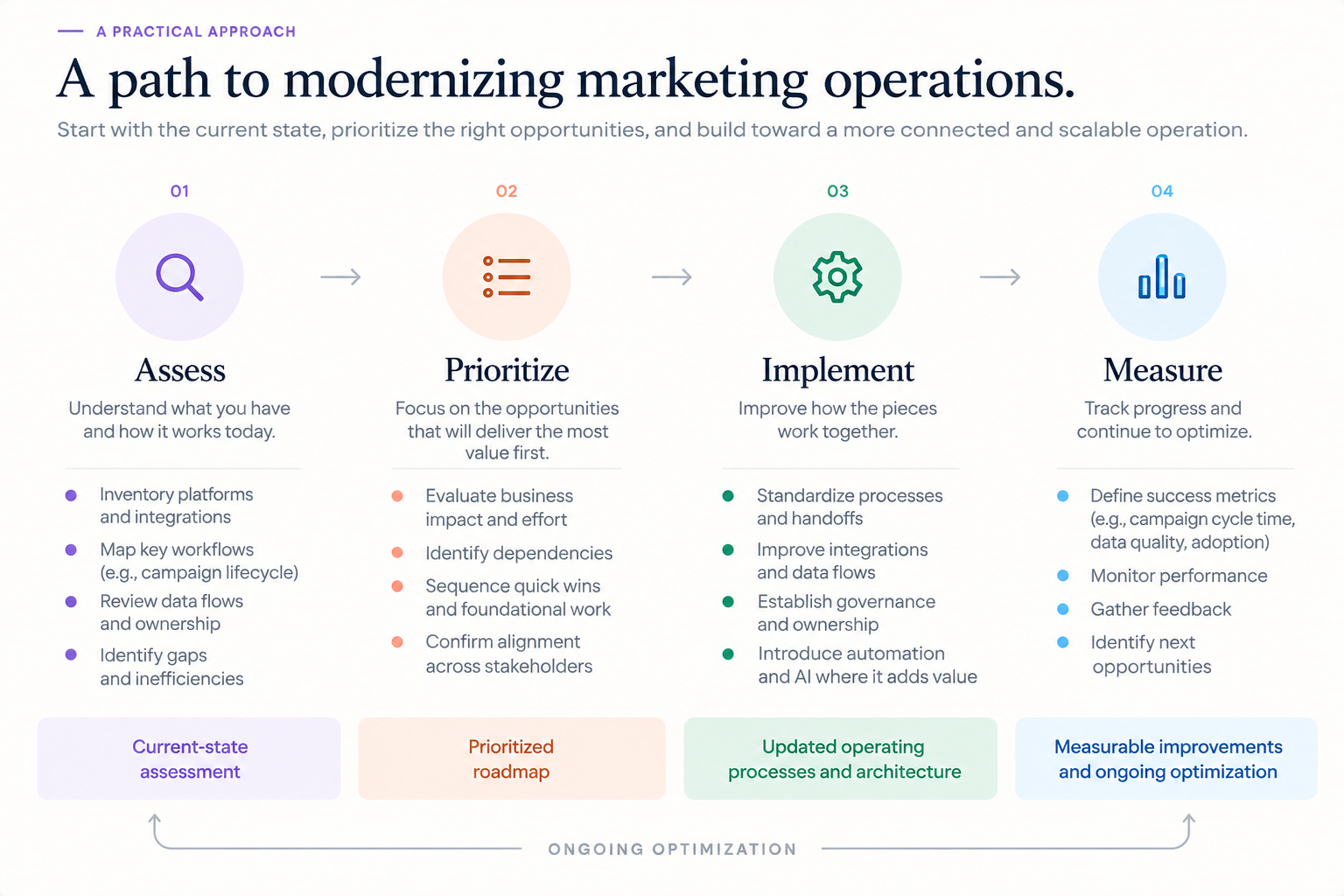
4. Building Toward a More Connected Environment
The future-state architecture should reflect how the organization needs to operate, with defined responsibilities across platforms, teams, and business processes. In our example, improvements could include:
- Standardizing campaign intake and approvals through Workfront.
- Aligning lead management and lifecycle processes across Marketo and Salesforce.
- Improving governed customer-data access through Snowflake.
- Using shared definitions for Tableau performance reporting.
- Incorporating AI-assisted activities into approved workflows with appropriate oversight.
These improvements can often be introduced incrementally while campaigns and existing programs continue running. Define the performance baseline before implementation. Campaign production time, manual touchpoints, lead routing accuracy, data quality, and reporting efficiency are useful measures.
5. Making Modernization an Ongoing Practice
Marketing technology environments keep evolving with business requirements and new capabilities. A documented architecture, clear governance, and a consistent way to evaluate opportunities make it easier to improve systems without introducing unnecessary complexity.
Some modernization initiatives involve straightforward changes to processes or integrations. Others call for larger architectural decisions or investments. A structured assessment and prioritization process helps identify the right approach and keeps the work focused on measurable outcomes.