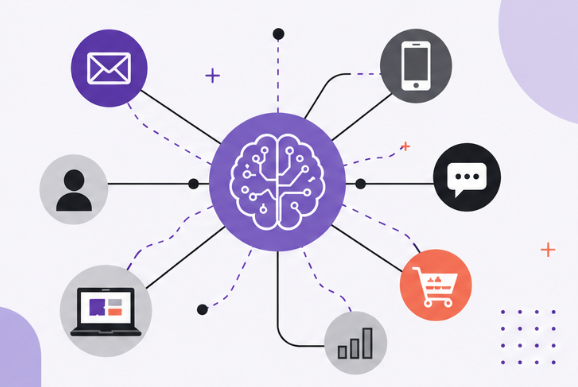
If you work in marketing operations, "agentic marketing" probably sounds both exciting and strangely familiar.
Because underneath the AI branding, a lot of the core ideas have existed for years.
In 2010, I remember hearing it called a "Traffic Cop" in Marketo. In 2016, we kicked off an entire org-wide initiative focused on NBA (Next Best Action, not the sports league!). And over the next decade, it evolved into other buzzy terms: hyperpersonalization, journey orchestration, behavioral triggers, adaptive or "always-on" campaigns, and real-time recommendation engines.
Marketing teams have been trying to deliver "the right message at the right time" for a long time.
The difference now (both in the tools themselves and the flood of LinkedIn posts about them) is that AI makes some of this dramatically more achievable at scale.
Today, instead of marketers manually building every rule, branch, segment, and subject line, AI can increasingly generate content, optimize timing, determine cadence, personalize messaging, choose channels, and decide what action to take next.
That's the "agentic" part.
Most companies were never limited by the idea of personalization. They were limited by operational reality.

And while the technology is impressive, this is the part that sometimes gets lost in the hype: most companies were never limited by the idea of personalization. They were limited by operational reality.
Because even today, the smartest AI system still depends on clean customer data, connected systems, trustworthy reporting, clear business goals, governance, and cross-functional alignment.
If your CRM data is fragmented, your attribution model is unreliable, your teams operate in silos, and nobody trusts the lifecycle logic already in place, adding AI doesn't magically fix that.
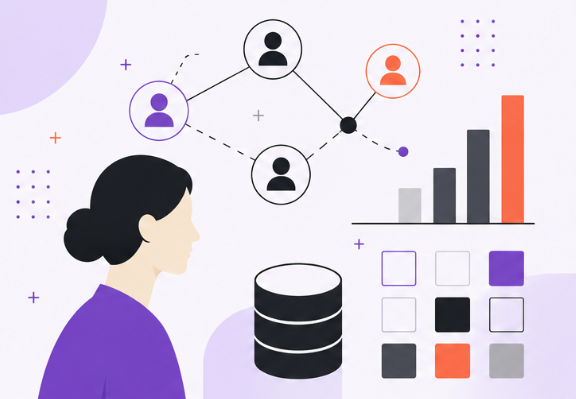
AI doesn't automatically solve operational problems. In many cases, it just scales the inconsistency faster. That's why marketing operations work still matters so much, even as the terminology evolves.
Call it MarkOps, RevOps, lifecycle orchestration, GTM engineering, or agentic marketing infrastructure: the foundational work is often the same: connecting systems, data, processes, and customer experiences in a way that can actually scale.
The companies best positioned for "agentic marketing" aren't necessarily the ones buying the most AI tools. They're the ones that already built operational maturity underneath them.
AI can accelerate a strong foundation. But it still struggles to replace one.