Over the last year, marketing technology vendors have been racing to add AI to everything.
AI-generated emails, campaigns, segments, reports, dashboards, content, insights... if there's a button, there's probably an AI feature attached to it.
Some of those capabilities are genuinely useful. I've been experimenting with many of them myself and expect they'll continue to improve.
What hasn't changed, however, is what determines whether a marketing automation platform succeeds or fails.
Whether you're implementing HubSpot, Marketo, Eloqua, ActiveCampaign, Salesforce Marketing Cloud, or another platform, the companies that get the most value still tend to do the same foundational work first.
If I were joining a project tomorrow, these are the seven areas I'd STILL focus on before building a single campaign. Some might call it the boring side of marketing. I completely disagree.
I call it the geeky "let's collaborate and build something awesome" side. Probably where some of my favorite whiteboarding sessions came from, alongside some of the smartest people I've had the privilege of working with.
Let's get started.
01 — Strategy
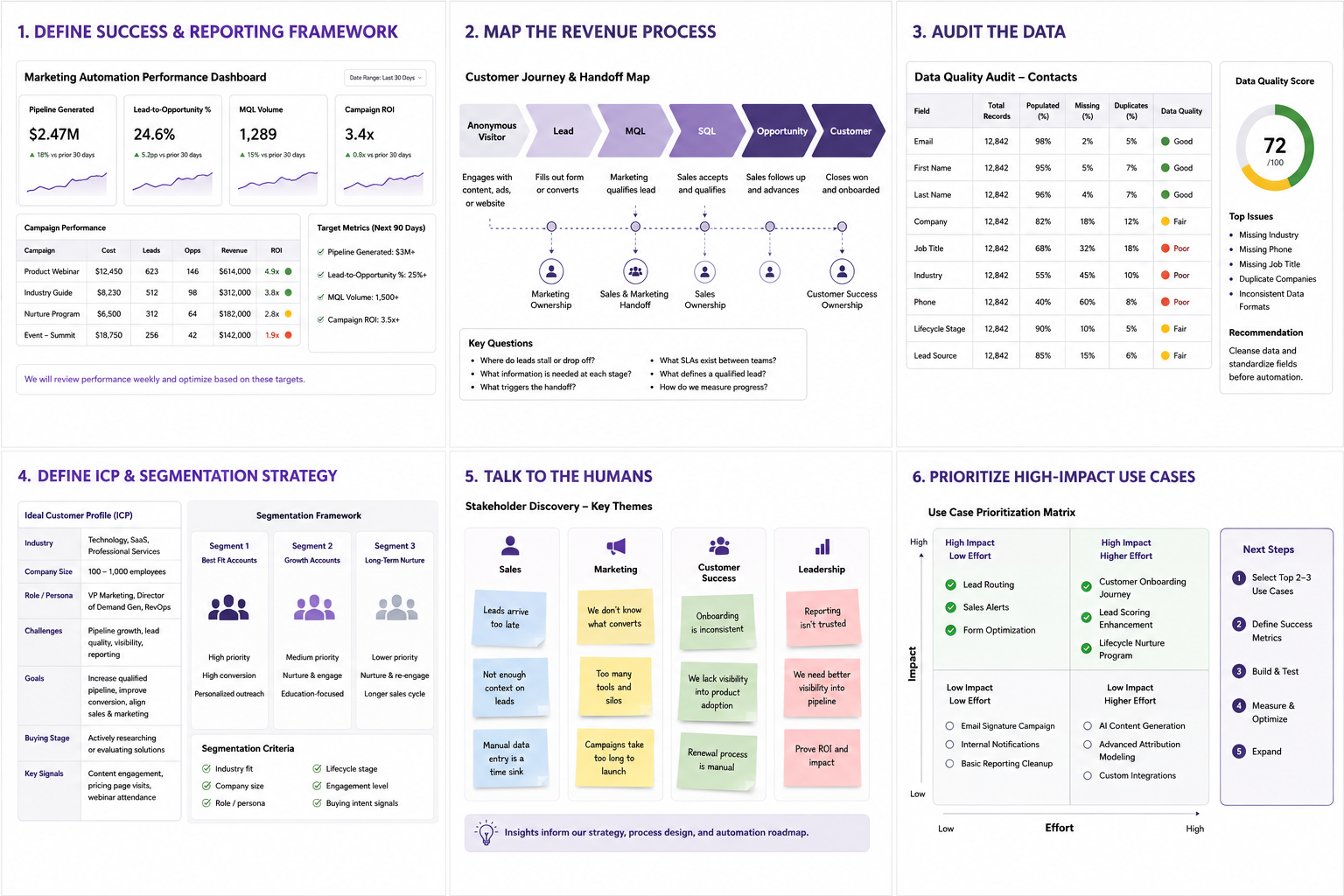
Define Success and Your Reporting Strategy
One of the first questions I ask is simple:
Why are we doing this?
It sounds obvious, but many organizations purchase a platform before defining exactly what they expect it to improve.
Are we trying to generate more pipeline? Improve lead quality? Increase customer retention? Reduce manual work for the sales team? Improve visibility into marketing performance?
The answer matters because it influences everything that follows.
It also helps establish a reporting framework from day one. Before launching a campaign, I want to know:
- What metrics are we trying to improve?
- What are the current baseline numbers?
- What would success look like in 30, 60, or 90 days?
- How frequently will results be reviewed?
- What would indicate that we need to adjust course?
A marketing automation platform should make it easier to measure business outcomes, not simply send more emails.

02 — Process
Map the Revenue Process
Before discussing automation, I like to understand how someone actually becomes a customer.
More questions to ask:
- Where do leads come from?
- How are they qualified?
- Who owns them?
- What information is needed at each stage?
- Where do prospects tend to stall or disappear?
Many implementation challenges are not technology problems at all. They're process problems that become visible once a platform is introduced.
A simple exercise mapping the journey from first touch through closed business often uncovers gaps in ownership, communication, reporting, or follow-up that have existed for years.
Technology tends to magnify whatever process already exists. That's why it's worth understanding the process before automating it.
I should also note that discovering problems shouldn't be seen as a negative; it should be seen as progress. It's a little like when I finally figured out why my clothes were always coming out of the dryer slightly damp. For months I kept rerunning cycles and wondering what was wrong. It turned out the issue wasn't the dryer at all. It was the vent.
The same thing happens in marketing operations. Sometimes the symptom is poor lead quality, low conversion rates, inconsistent reporting, or frustrated sales teams. The actual problem is somewhere else entirely.
That's why process mapping is so valuable. Once you identify the root cause, the solution becomes much easier to see. So don't forget to check the vent, y'all.

03 — Data Quality
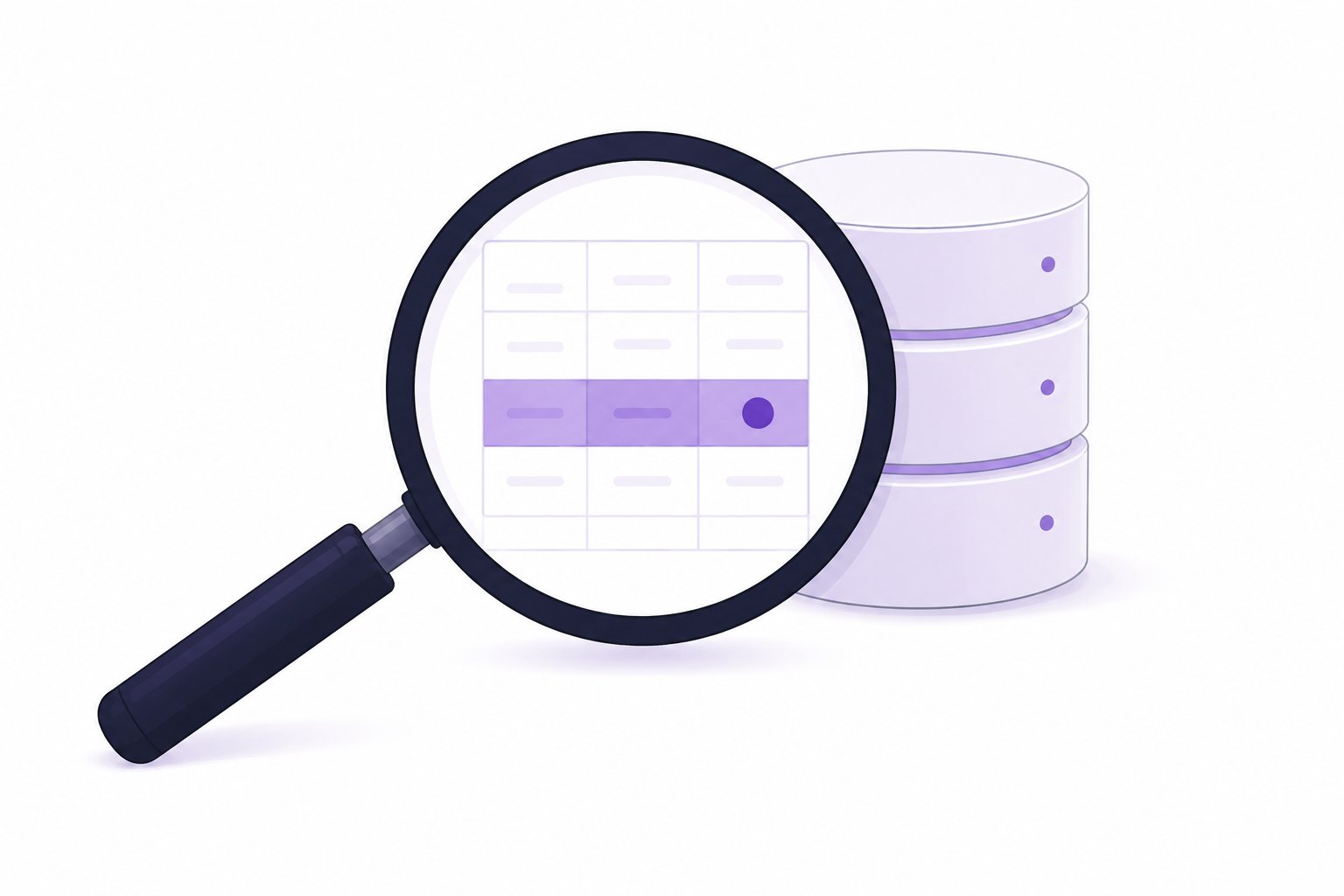
Audit the Data
This is usually less exciting than discussing AI or automation, but it's often where the biggest issues are hiding. Again, this is when "fun Anvi" likes to come out.
Before building workflows, I want to understand:
- Where customer and prospect data lives
- Which systems exchange information
- Whether integrations are functioning properly
- How many duplicate records exist
- Which fields are consistently populated
- Which fields are missing or unreliable
The quality of your segmentation, reporting, lead scoring, personalization, and AI outputs will all be influenced by the quality of your data.
Good automation starts with trustworthy information.
As some of my favorite data engineers used to say: "garbage in, garbage out." Brutal, but true.
04 — Segmentation
Define Your Ideal Customer Profile and Segmentation Strategy
Not every contact should be treated the same.
One of the highest-impact exercises a company can perform is identifying the characteristics of its best customers and using those insights to drive segmentation.
Or, since it's currently summer in Texas and apparently that's where my brain is today, not every Fredericksburg peach should be treated the same.
Some are perfectly ripe and ready right now. Others need a little more time, and it's your job to help them succeed in ideal conditions. (In this use case, a literal paper bag on the counter.) If you treat them all identically, you're going to end up disappointed.
The same thing happens with prospects.
Some are actively evaluating solutions. Others are simply browsing. Some are ready for a conversation today. Others may not be ready for six months.
Marketing automation becomes significantly more effective when we recognize those differences and respond accordingly.
Questions I typically explore include:
- Which customers generate the most value?
- Which customers are easiest to support?
- What traits do successful customers have in common?
- What signals indicate genuine buying intent?
- How should different audiences be grouped and prioritized?
Once those answers are clear, we can begin designing segments, lead scoring models, nurture programs, and personalization strategies that actually reflect how the business operates.

05 — People
Talk to the Humans (Sorry, You Can't AI Your Way Out of This One.)
This may be the most overlooked step in the entire process.
After spending the last section talking about segmentation, scoring models, customer profiles, and Texas peaches, it's worth remembering that we're still talking about actual people.
I like to spend time with sales, marketing, customer success, operations, leadership, and IT. (Sometimes with a laptop. Other times with a whiteboard. Almost always with a full thermos of coffee.) Each group sees different parts of the customer journey and experiences different frustrations.
Some of my favorite questions are:
- What slows you down today?
- What tasks feel repetitive?
- What information do you wish you had?
- What questions do customers ask repeatedly?
- What do you wish the system could do for you?
These conversations often reveal opportunities that never appear in dashboards or requirements documents.
Sometimes the answer is automation. Sometimes it's a process change. Sometimes it's better reporting, documentation, training, or alignment between teams. The only way to know is to ask.
06 — Alignment
Align the Stakeholders Before You Build Anything
This one deserves its own section because it is responsible for more implementation delays, rework, and frustration than most people realize.
At some point in every project, you'll find yourself discussing questions like:
- When is a lead considered qualified?
- When should sales be notified?
- Who owns follow-up?
- What information is required before a handoff?
- Which reports matter most?
- What happens when a prospect becomes a customer?
The temptation is to answer those questions quickly and start building. Here's a tip: Don't.
A workflow built around assumptions is usually a workflow you'll be rebuilding three months later.
I like to get sales, marketing, customer success, operations, leadership, and IT aligned before major configuration work begins. Not because everyone needs to agree on every tiny detail, but because everyone should understand how the process is supposed to work.
The added benefit is adoption.
People are far more likely to trust and use a system when they helped shape it.
It's surprisingly difficult to complain that "the system doesn't work" when you were standing at the whiteboard helping design it.
The best implementations aren't built for stakeholders. They're built with them.
07 — Prioritization
Prioritize a Few High-Impact Use Cases
A common mistake is trying to automate everything immediately.
I get it. When you've just invested in a new platform, there's pressure to demonstrate value quickly. Leadership wants results. Marketing wants campaigns. Sales wants leads.
The temptation is to build ten things at once.
I'd rather build three things that work.
In most cases, I'd identify two or three initiatives that are highly visible, measurable, and likely to deliver value quickly.
Examples might include:
- Lead routing and assignment
- Sales notifications and alerts
- Customer onboarding journeys
- Re-engagement campaigns
- Lead scoring improvements
- Form standardization and data governance
Early wins build momentum. They also help teams gain confidence in the platform and create support for larger initiatives later.
That's something I bring up often with leadership teams: let's find some low-hanging fruit, create a few quick wins, demonstrate value, and use that success to build support for larger initiatives down the road.
It's much easier to get support for Phase 2 when Phase 1 is already producing results.
(And yes, I realize I somehow made it through this entire article talking about peaches and still ended with fruit metaphors. Can you tell I spend every week at the farmer's market?)
Final Thoughts
I've worked in marketing technology long enough to watch multiple waves of innovation come and go.
The tools have become dramatically more powerful. AI is changing how many teams work. Marketing automation platforms are more capable than ever.
Yet the projects that succeed still tend to start in the same place: clear goals, solid data, well-defined processes, alignment between teams, and a thoughtful rollout plan.
If you've read a few of my posts, you'll probably notice a recurring theme: strategy before technology, process before automation, and people before platforms.
AI is changing a lot about how we work. Those fundamentals, including getting everyone rowing in the same direction, haven't changed nearly as much. And that's why, even in 2026, I'd still start here first.