What Was Built
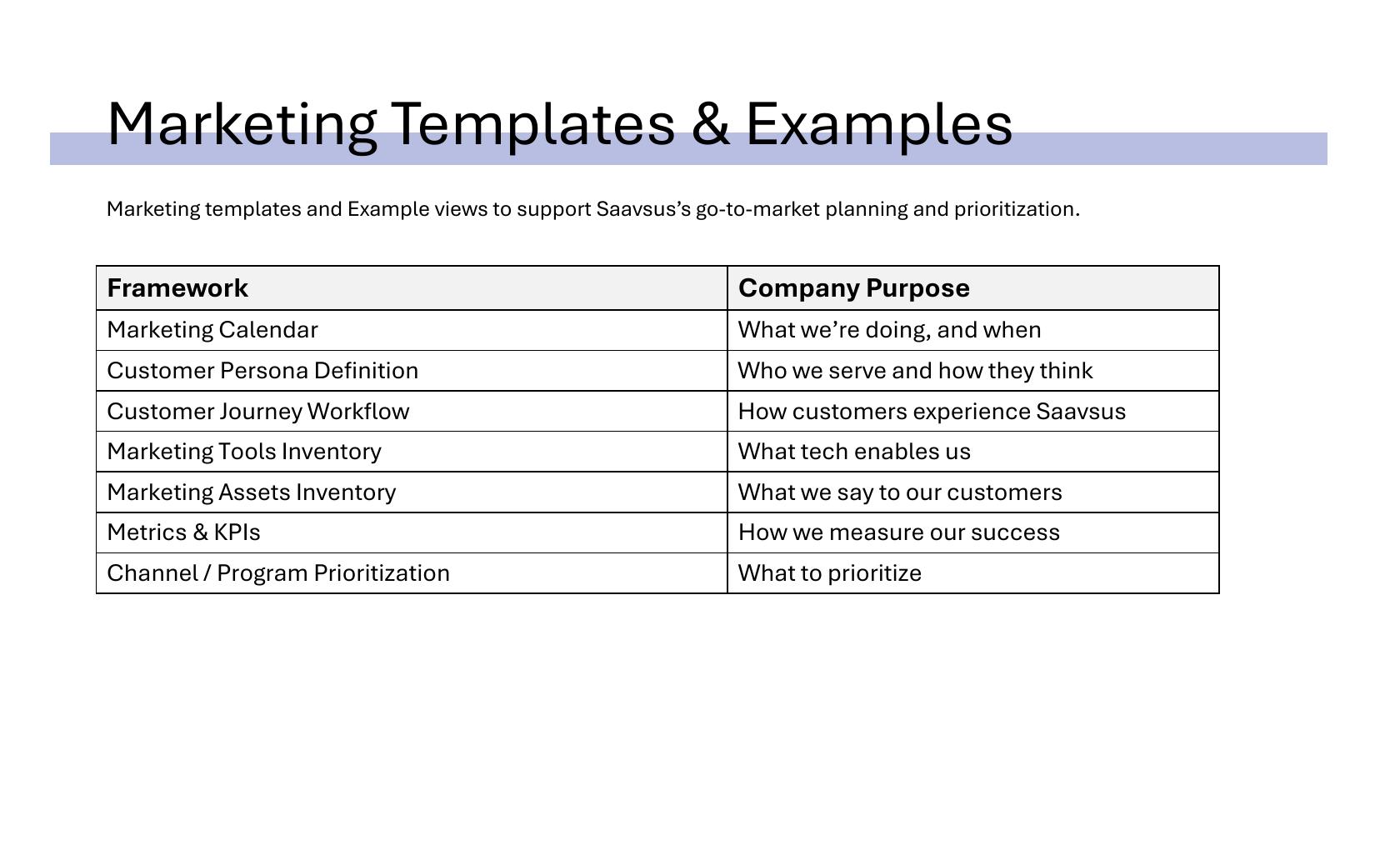
Each use case below represents a distinct deliverable or workstream from this engagement, showing the challenge, approach, and what was produced.
LinkedIn-First Outbound Campaign Stack
The client was in early-stage outreach with a founder-led motion and no clear separation between tools. The work here was to structure a deliberate stack — LinkedIn via Dripify as the primary entry point, cold email via Woodpecker for depth and conversion, and ACT! as the CRM system of record — without over-engineering it before the signal existed.
A day-by-day coordination sequence was mapped out (Day 1 LinkedIn connection → Day 3 email → Day 5 LinkedIn follow-up, etc.) along with a cost comparison matrix and a clear framework for when to evolve toward HubSpot or ActiveCampaign as volume grows.
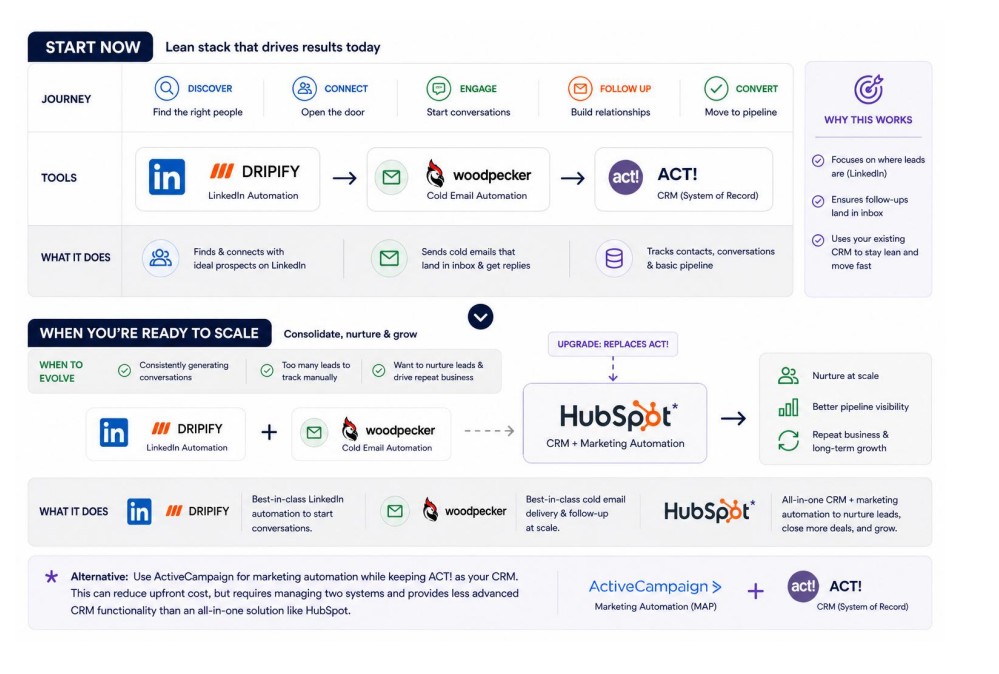
Outbound Stack — LinkedIn & Email Sequence
Customer Journey Workflow & Persona-Driven Mapping
With the client's flagship product launch as the primary use case, this work created a structured, visual customer journey map tracing awareness through conversion. The journey identified key touchpoints — webinar signup, awareness email, sales call, demo session — and mapped them against the channels and tools in use.
The deliverable included both a text-based workflow table and a visual flow diagram, giving the team a concrete reference for how to support the customer at each stage and where gaps in messaging or follow-up existed.
Marketing Tools & Assets Inventory
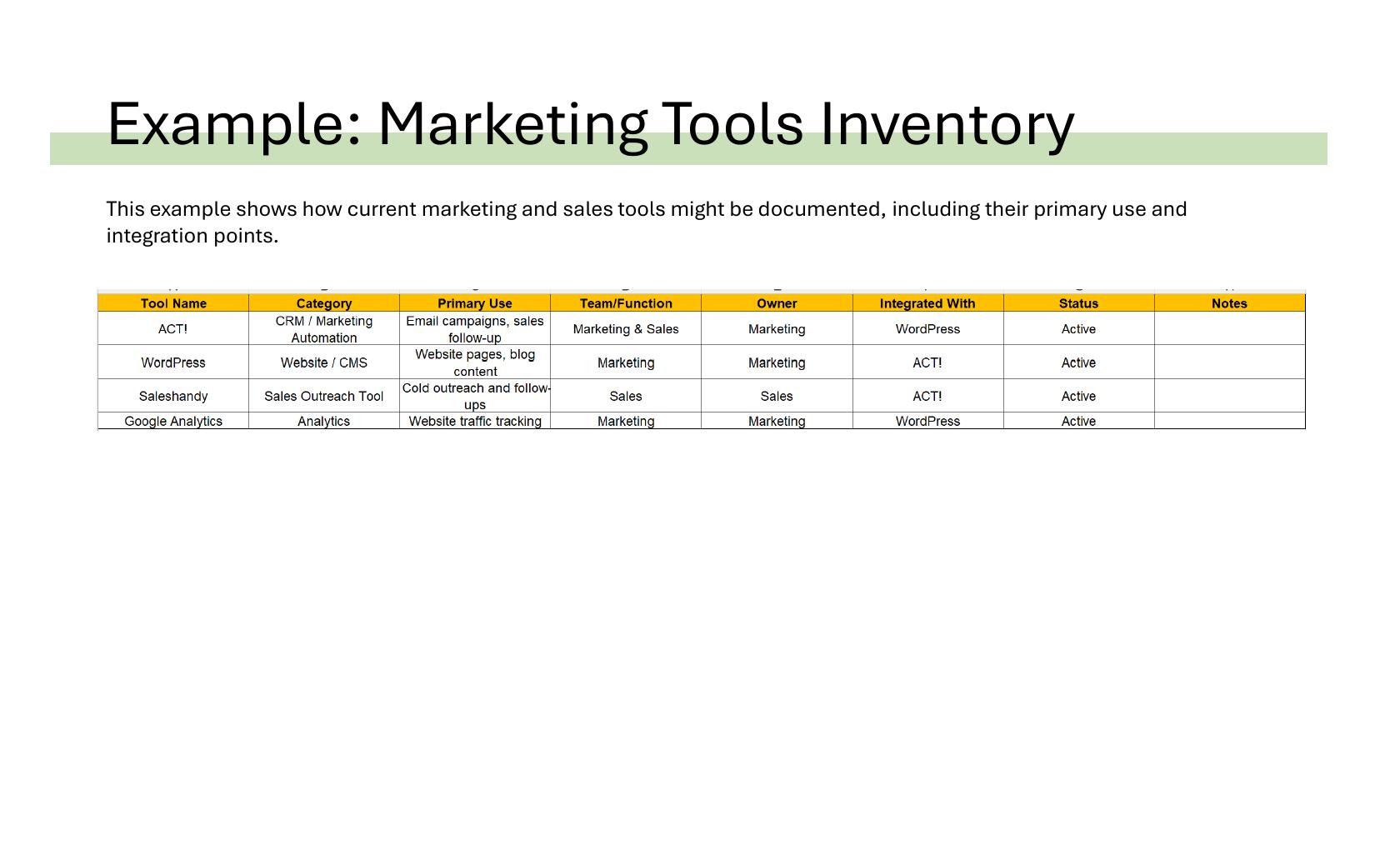
Two separate inventories were developed: one documenting the marketing and sales tech stack (ACT!, WordPress, Saleshandy, Google Analytics) with categories, owners, integration points, and status — and one cataloging existing assets like the program overview page, awareness emails, and case studies in progress.
Both inventories were built as Excel templates the client could update and maintain independently, structured around persona, purpose, and current status so gaps were immediately visible.
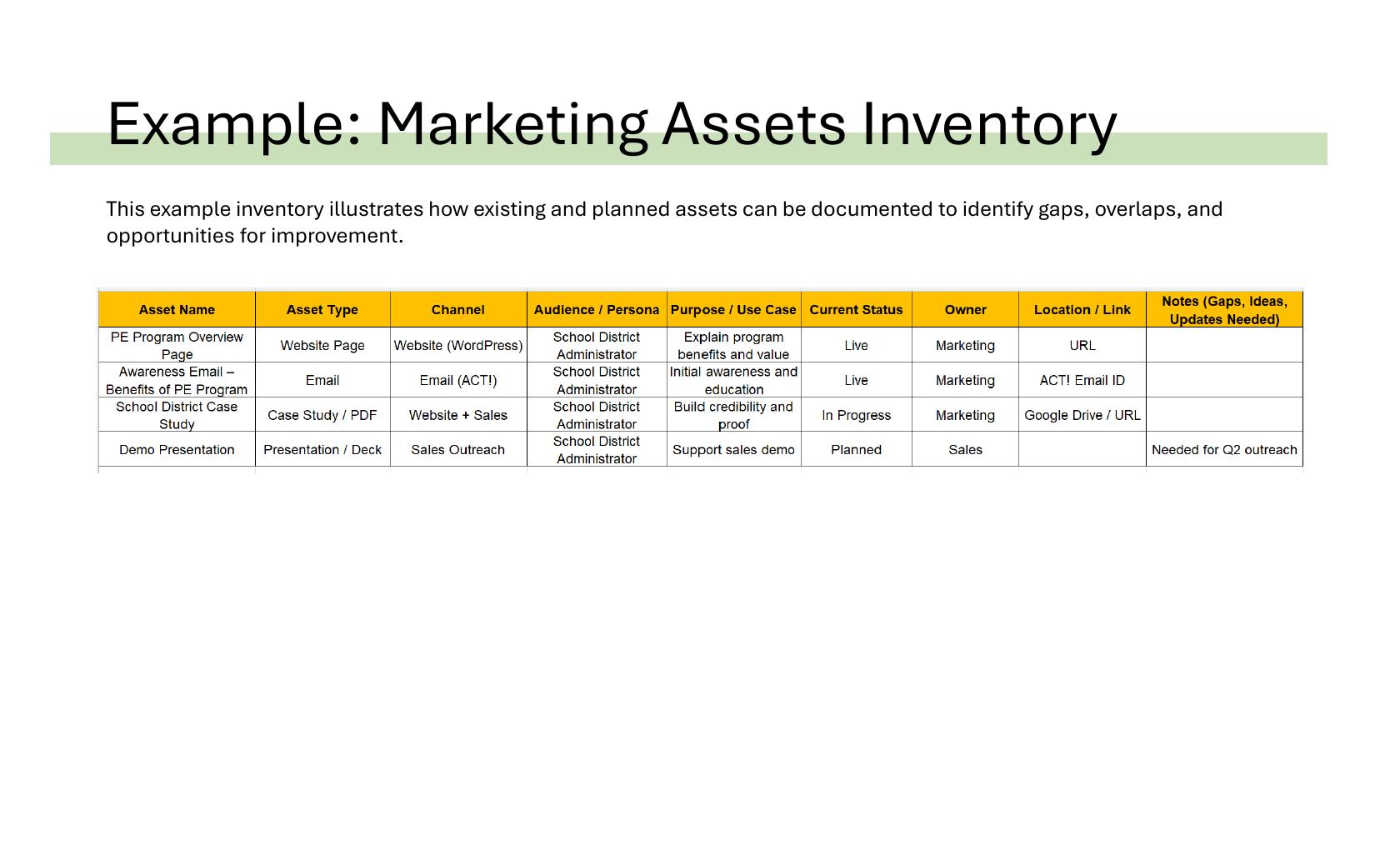
Marketing Assets Inventory — Jan 2026
Metrics & KPI Framework with ACT! Reporting Guidance
Rather than building an aspirational dashboard disconnected from what was actually in place, this work met the client where they were. The deliverable documented core marketing and sales metrics traceable inside ACT!, flagged where manual workarounds were needed, and outlined ACT!'s native strengths and limitations so the team could make pragmatic decisions without over-investing in tooling prematurely.
A longer-term recommendation was also provided: as volume grows and the stack evolves, a dedicated marketing automation or measurement tool would reduce manual effort and enable better learning across campaigns.
Metrics & KPI Framework — Jan 2026
Digital GTM Kickoff — Session Agenda & Working Framework
The session was designed to move quickly from context to decision: 15 minutes on GTM context and audience inputs, 20 on campaign architecture and channel strategy, 20 on website and email digital infrastructure, and the remainder on automation readiness, KPIs, and phasing for the next 30–60 days.
Rather than a generic workshop format, the agenda was structured around specific decisions the client needed to make — channel mix by funnel stage, launch-ready vs. post-launch functionality, platform gaps — so the session produced alignment, not just conversation.
GTM Kickoff Session Agenda — Jan 2026